The God of Nothing
I used to read the Bible and roll my eyes at the Israelites. I’d see verses like 1 Thessalonians 1:9, describing how people "turned away from idols to serve the living and true God," and I’d just think: Really? Again? Why were these people so obsessed with carving wooden statues or bowing down to a Golden Calf? It seemed like such a strange, ancient kind of nonsense. Did they not learn their lesson after the first five times the "fake gods" failed them?
I decided to dig deeper, so I pulled out a concordance. If I’m being honest, those things really make my head hurt! They don’t read like a normal dictionary; they’re full of weird codes and fragments that feel more like computer programming than reading. But as I squinted at the Hebrew, I found something that changed everything.
The Divine Pun
In the original language, the word for the true God is 'Êl—a word that signifies power, might, and substance. But the word used for "idol" is 'ĕlîyl. It’s a clever, biting pun.
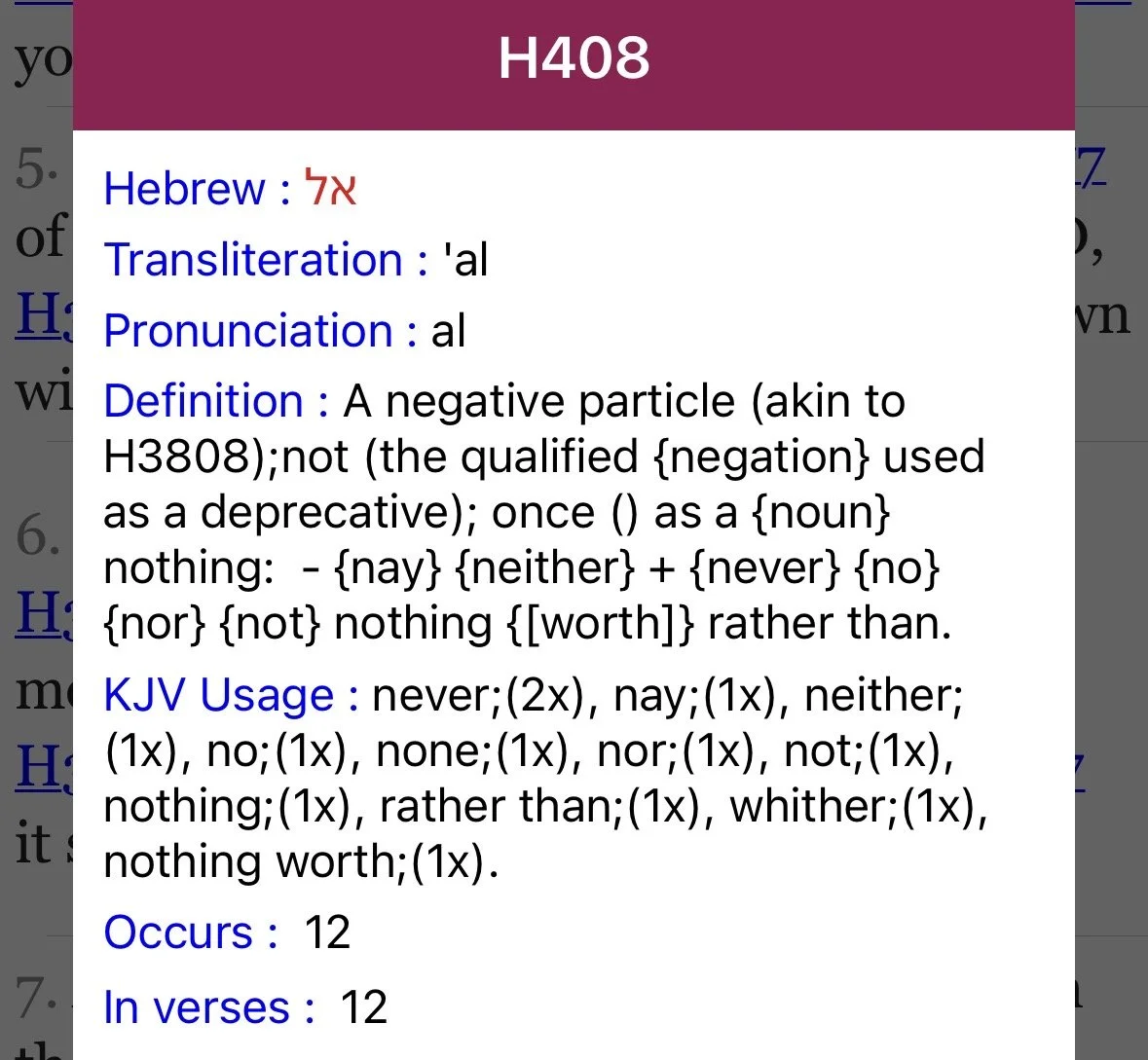
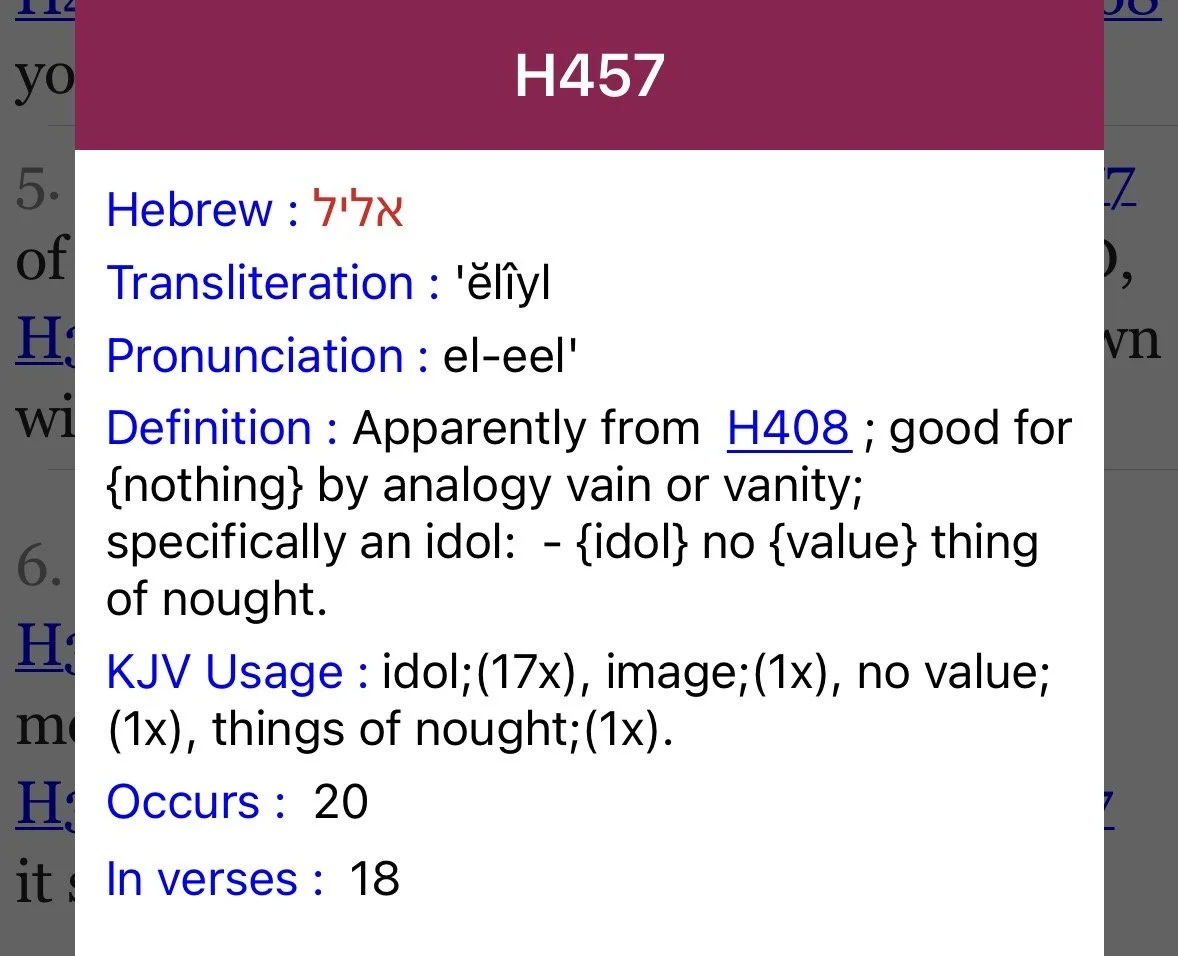
The word 'ĕlîyl comes from the root 'al, which literally means "nothing," "no," or "nought." By calling a statue an 'ĕlîyl, the Bible isn't just saying it's a false god; it’s calling it a "No-God." It is a "thing of nought"—something that looks like it has substance but is actually an empty void.
That’s when it hit me. An idol isn't just a statue from 3,000 years ago. An idol is anything we look to for identity, security, or worth that isn't actually capable of providing them.
The Modern Altar
Once I understood that an idol is simply a "God-sized hole" filled with a "nothing-sized object," I started seeing them everywhere:
The Career Idol: We treat a job title like a permanent source of worth, but if the job disappears, our identity evaporates (@ Me).
The Digital Idol: We "bow down" to the scroll, seeking validation in likes and comments that offer a hollow sense of belonging.
The Achievement Idol: We think if we just "make" and "turn" ourselves into something perfect, we will finally be loved (@ Me).
Meeting the "Phantom Nurse"
I realized I had been a "worshipper" for years, but my idol didn't sit on a shelf! It lived in my scrubs. I call her the "Phantom Nurse."
She was a survival mechanism I perfected as a child. When your peace depends on a parent’s mood, you become a master at reading the room. You learn to perform and fix things just to stay safe. I carried that "survival energy" into nursing school, where my worth became a 1:1 reflection of my grades. By the time I reached the Hospital, I wasn't just working a shift; I was worshipping at the altar of performance, hoping that if I stayed "perfect" enough, the environment would finally stay calm.
I thought I was "dedicated," but the truth was harder to swallow: I was addicted to the dopamine hit of being told I was doing a good job. Because I worshipped this ghost—this unrealistic version of myself—my peace was always up for debate.
If a coworker lied about me, my "god" was attacked.
If I was in my manager’s office "telling on myself," I was sacrificing my sanity for a scrap of validation.
Minding Your Own Peace
In 1 Thessalonians 4:11, Paul tells us to "make it our ambition to lead a quiet life: you should mind your own business."
When my performance was my idol, I couldn't mind my own business because I was too busy minding everyone else’s opinion of me!!! I realized that if your identity can be destroyed by a coworker’s lie or a patient’s insult, you never actually had an identity—you had a performance.
We have to smash the "thing of nought" before we can hear the voice of the God who has already chosen us. I had to stop blaming the manager for my lack of peace when I was the one who handed them the keys to my self-worth.
The Reality Check: The "Empty" 15 Minutes
Think about a random Tuesday afternoon. You have a 15-minute break. You aren't necessarily "busy," but you feel that slight sense of unease—maybe stress about a situation or just feeling "off."
The "Turn": Without thinking, your hand reaches for your phone to scroll TikTok or Instagram. You aren't looking for info; you are "turning" your attention away from discomfort and into the screen.
The Idol: The distraction becomes the idol. You’re asking that scroll to "save" you from anxiety or boredom.
The "Nought": You put the phone down 20 minutes later. You don’t feel better; you feel more drained. The distraction was a "thing of nought"—it’s spiritual cotton candy! It tastes like something for a second, but it vanishes and leaves you hungrier than before.
The "Weight" of Reality
In Hebrew, the word for "Glory" (Kavod) literally means "weight" or "heaviness."
Idols are "light": They are "nought," like dust or vapor. They blow away when the wind gets rough.
The Truth is "heavy": It has substance. It’s like a rock you can actually stand on.
My strive for more degrees, my wedding, and at times my social media are "light" things—they are beautiful, but they come and go. The "I Am" is the "heavy" reality that stays put.
A Practical "Turn" for This Week
Since we all have a lot on our plates with our own messy Adult lives, try the "60-Second Turn":
Catch the Gremlin: When you feel that "mean little gremlin" energy or the urge to scroll to escape stress, stop for one minute.
Identify the Nought: Acknowledge, "This stress is real, but this [Social Media/Perfectionism] is a 'thing of nought' right now."
The Return: Ask, "What is the 'heavy' truth here?" (Example: "I am a capable nurse, I am loved by my Chivita, and I am held by God.")
The Litmus Test: Ask yourself, "If this was taken away tomorrow, would I still have a reason to get out of bed?" If the answer is, "It would be hard, but I’d be okay because I know who I am," then it’s just a part of your life. If the answer is "No," you’ve found your idol!
The heavy truth is this: You do not have to build a worth that has already been given to you.
The "I Am" is the only thing heavy enough to hold your weight. Every other "thing" is just a gift to be enjoyed or a tool to be used—but none of them are strong enough to be your God.