Make Room for Growth
The Missing Name
We have reached the end of the Book of Esther, and if you have been paying close attention, you might have noticed something strange. In all 10 chapters, amidst the banquets, the decrees, the gallows, and the wars... God’s name is never mentioned.
Not once. No "Thus saith the Lord." No burning bushes. No prophets speaking thunder. Theologically, this makes Esther unique. It is the only book in the Bible that doesn't explicitly name God. Why?
Some scholars say it reflects the reality of the Jewish exiles who felt distant from God.
But I think there is a deeper reason: It is an invitation to hunt for His fingerprints.
Just because the Architect isn't shouting doesn't mean He isn't in the building. His hiddenness makes His power even more amazing. He didn't need a miracle to save the Jews; He used a series of “coincidences.” The lesson? God is often most present when He is most hidden.
The Dice Roll
This brings us to the final act: The Feast. The holiday is called Purim, which comes from the Persian word Pur, meaning "the lot" (like rolling dice). Haman cast lots to determine the best day to destroy the Jews. He thought he was playing a game of chance.
But Proverbs 16:33 tells us, "The lot is cast into the lap, but its every decision is from the Lord."
Haman rolled the dice, but God weighed them. The very name of the holiday mocks the enemy. It says: "You thought this was random chance? You thought this was luck? It was Providence all along."
Trauma vs. Triumph
In Chapter 9, after the victory, Mordecai and Esther send out a decree. It isn't a command to fast or pray. It is a command to party. They established Purim as a day of "feasting and gladness, days for sending gifts of food to one another and gifts to the poor" (Esther 9:22).
As a nurse, I think about PTSD. This nation had just faced the threat of total annihilation. They should have been traumatized. They should have been fearful. But God commanded them to celebrate.
Why?
Because celebration is the cure for fear. By turning the anniversary of their near-death into a massive party, they overwrote the trauma with triumph. They refused to let Haman’s memory be a scar; instead, they made it a punchline. Joy is a form of spiritual resistance. When the enemy tries to break you, the most dangerous thing you can do is laugh and eat cake.
We started this series looking at Esther as a "Cracked Vessel"—an orphan girl, thrown into a meat grinder of a harem, married to a pagan King, living in a land that wanted her dead. She wasn't a perfect Sunday School hero. She was a real woman in a terrifying situation. But God used her cracks to let His light shine through. He used her position to save a nation. He used her bravery to reverse a death sentence. If you take one thing away from this series, let it be this: You do not need to be perfect to be used by God. You just need to be placed by Him. Your background, your trauma, your "harem," and your sleepless nights—none of it is wasted. The King is on the throne, the decree has been reversed, and the table is set.
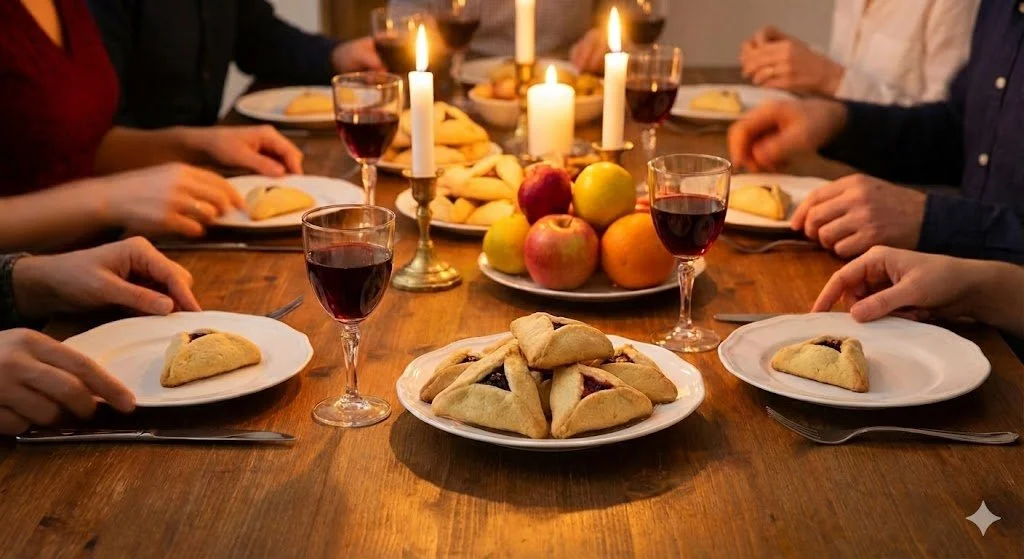
It’s time to celebrate!
A Prayer for the Legacy
"Lord,
Thank You for the Book of Esther. Thank You that even when I cannot hear Your voice or see Your name, I can trust Your hand. You are the God of the hidden places. You are the God who turns rolls of the dice into acts of destiny. As I close this chapter, teach me how to celebrate Your victories. Help me to replace my fear with feasting. Don't let me focus on the 'Hamans' of my past; help me focus on the deliverance of my present. I am Your vessel. Cracked, imperfect, but willing. Use me for 'such a time as this.'
Amen."
Reflection Question: How can you "celebrate" a past victory in your life that you have let fade from memory? Is there a "near-miss" disaster that you need to thank God for today?
(Series Complete! We did it!)